A Fishing Mom Design for Real Embroidery Projects
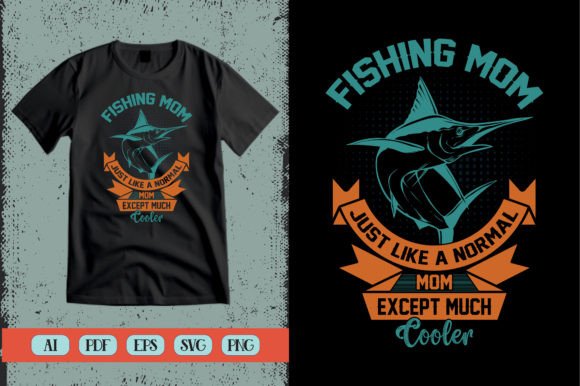
When a design like I'm a Fishing Mom Just Like a Normal Mom lands in your library, the first thing you do as an embroidery professional isn't just open the files. You imagine it stitched out. You picture it on a fabric, worn by a person, or gifted in a context. This design, with its playful, self-aware statement, creates an immediate mood of friendly confidence. It's not just a graphic; it's a personality piece. The layout suggests a central, bold statement, likely with supporting visual elements, making it inherently suitable for a focal point on apparel or gifts. It feels personal, conversational, and perfectly suited for the handmade, bespoke world we operate in.
Where This Design Finds Its True Home
In practical terms, this isn't a design you'd use on everything. Its charm is specific. I immediately envision it on a custom, embroidered sweatshirt for a client who loves the outdoors, or as a standout feature on a durable canvas tote bag for a fishing trip. It would be a delightful, personalized gift for a mom—perhaps on a cozy blanket or a pillow cover for a cabin. For small business owners and Etsy sellers, this design translates effortlessly into marketable products: premium tees, aprons for a rustic kitchen, or even a high-quality patch that can be applied to a hat or jacket. The theme lends itself to boutique merchandise with a niche, heartfelt appeal.
Thinking about digital product sellers, the provided AI, EPS, SVG, and PNG files are crucial. They allow for clean scaling and integration into printable mockups, website previews, and other digital assets for your craft business. This flexibility supports both commercial embroidery projects and digital sales.
Navigating the Stitching Reality
How will it perform in the hoop? Any design with text, especially a central slogan, demands attention to stitch clarity. The potential for tiny lettering or intricate details in the accompanying graphics means you must test it first. Run this embroidery file on scrap fabric identical to your final product fabric. Check the stitch density—too dense on a thin t-shirt or baby apparel could lead to puckering. Assess the color contrast; the 100 color changeable feature mentioned is a significant advantage, allowing you to adapt the palette for light or dark backgrounds.
For textured fabrics like sweaters, or stretchy fabrics like caps, a proper stabilizer is non-negotiable to maintain the design's integrity. On curved surfaces like caps, the design's layout needs to be evaluated for fit within a smaller hoop size. This is where checking the actual file dimensions before purchase is essential.
Scenarios Where This Design Requires Extra Care
There are projects where I'd proceed cautiously. Embroidering this onto a delicate, layered garment might be challenging if the design has large, solid fill stitch areas. Similarly, products destined for frequent washing, like kitchen towels or baby clothes, need a robust embroidery execution to ensure longevity. The visual appeal and customer trust in your handmade product depend on that durability. Always inspect the small details in your software preview; confirm that the satin stitch borders or any fine decorative accents will translate clearly at your intended size.
A professional note: before using this for commercial embroidery or selling finished items, confirm the licensing terms. The product description states it's a digital clip art file, but clarity on resale of embroidered physical goods is a must for creative entrepreneurs.
Elevating Your Product's Value with This Design
From a business perspective, I'm a Fishing Mom Just Like a Normal Mom adds tangible value. It enables brand consistency for a shop focused on outdoor or family themes. Its giftability is high—it feels personal and specific. For customer engagement, a design like this tells a story, which is far more compelling than a generic graphic. On a finished product, such as an embroidered patch or custom apparel, the professionalism of the final stitch work, combined with this clever concept, elevates the perceived worth and supports a higher price point.
My final, practical advice for fellow makers is this: treat this as a design asset. Use it to create cohesive lines—maybe a "Fishing Mom" tote bag paired with a matching cap. Test it in black and white mockups to see how the composition holds without color. Compare it on both light and dark fabric backgrounds using your embroidery machine's preview functions. The design's strength is its personality, but its success on your real project hinges on your practical embroidery preparation. That's the difference between a file in a folder and a cherished, stitched masterpiece.