A Heartfelt Design for Valentine and Everyday Gifts
When a design like My Valentine Calls Me Mom crosses my workspace, I'm not just looking at a graphic. I'm envisioning it translated into stitches, applied to fabric, and ultimately, the smile on a recipient's face. This theme, a playful Valentine declaration intertwined with parental pride, immediately struck me as having a unique, warm-hearted appeal beyond the typical holiday motif.
The First Impression: Sweet, Playful, and Perfectly Timed
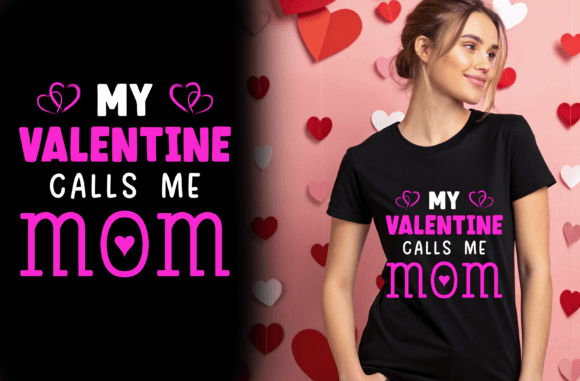
The concept itself creates an instant mood of affectionate humor and love. It’s not just a romantic Valentine's message; it's a family-focused one. This expands its potential use significantly. Visually, the phrase suggests a design that would likely lean towards a playful script or incorporate heart elements. The layout needs to balance the words "My Valentine" with "Calls Me Mom" in a way that feels cohesive and clear when stitched. For embroidery, this means evaluating the lettering style for stitch-ability—are the fonts too thin, too condensed? The detail level and visual personality here are key: it should feel sweet but not childish, elegant but not overly formal, making it suitable for a wide age range.
This design naturally belongs to projects that celebrate familial love. My mind immediately goes to custom apparel for mothers—a cozy sweatshirt or a soft tee. But it also sparks ideas for personalized gifts from children to parents, or even items for grandparents. I pictured it on a tote bag a mom uses for errands, or subtly embroidered on a kitchen towel, making a daily chore a little sweeter. The "Mom" angle gives it an evergreen quality alongside its Valentine timing.
Real-Life Embroidery Performance: Where It Shines and Where to Pause
Let's walk through a real scenario. I’m considering this for a custom-ordered embroidered baby blanket for Valentine’s Day, intended as a gift from a husband to his wife, their first child’s mother. Using My Valentine Calls Me Mom here makes perfect emotional sense. On a soft, stable blanket fabric, the embroidery would perform well. The text would be the focal point, so stitch clarity is paramount. I'd plan for a clean satin stitch for the main lettering if the file allows, ensuring a smooth, readable finish.
This design would excel on stable, medium-weight fabrics: sweatshirts, canvas tote bags, aprons, pillow covers, and woven blankets. These surfaces provide a good foundation for clear text embroidery. For baby clothes, I'd lean towards items like rompers or quilted blankets rather than thin, stretchy knits, to preserve design integrity. It could make a charming, small-scale patch for a cap or beanie, though careful attention to the small lettering on a curved surface would be needed.
Where you might need to use it more carefully is on very textured fabrics like heavy linen, where tiny details can get lost, or on dark fabrics if the design file doesn't have a clear outline for sufficient thread coverage. Thin or stretchy fabrics like standard t-shirts require excellent stabilizer technique to prevent puckering, especially if the design has any dense fill stitch areas. Always test on scrap fabric first. Products that need frequent washing, like kitchen towels or everyday apparel, benefit from a robust stitch structure—checking stitch density in the file is crucial for longevity.
Enhancing Value and Trust Through Craftsmanship
How does this embroidery file affect your finished product's appeal? When executed well, it transforms a generic item into a meaningful, personalized gift. This directly boosts product value and customer trust. A clean, professional embroidery of this phrase on a handmade product speaks to care and quality. For small business owners and Etsy sellers, it offers a ready-made, emotionally resonant design asset that can be adapted across product lines—from embroidered nursery decor to boutique holiday gifts—creating nice brand consistency. Its "giftability" is high; it’s instantly recognizable as a thoughtful gesture, which drives buyer engagement.
Practical Designer Notes for a Smooth Project
Before hooping up your final product, here’s my practical workflow for a design like this. First, I always run a test on a scrap of the exact fabric I intend to use. This reveals how the thread colors interact with the background—does red text pop on a burgundy sweater, or does it blend? I check the stitch-out for clarity, particularly in any small details or corners of lettering.
Reviewing the provided files—EPS, SVG, PNG, JPG—is essential. The vector files (EPS, SVG) are typically what you’ll use for machine embroidery, after conversion in your software. Confirm the design's compatibility with your machine and the appropriate hoop size for your project. Does the design scale well without losing definition? Inspect it in both black and white mockups to understand how it might look on light and dark backgrounds. This informs your thread color choices.
Using proper stabilizer is non-negotiable for a clean finish, especially on apparel. Finally, a crucial step for anyone selling finished items: confirm the licensing terms for this digital embroidery file. The description states it can be used for t-shirts, mugs, etc., but you must verify if commercial use of the embroidered products is permitted. Never assume; always check the specific license to protect your craft business.
A Design for Both Heart and Commerce
My Valentine Calls Me Mom is more than a Valentine's graphic; it's a versatile sentiment for family-centric crafting. Its appeal in embroidery lies in its emotional resonance, which, when stitched with quality, elevates simple products into cherished keepsakes. Whether you're a hobbyist making a gift for a loved one or a creative entrepreneur adding a new line to your small shop merchandise, this design offers a solid foundation. Approach it with a designer's eye: test, adapt, and stitch it with care. The result will be a product that feels handmade in the best sense—personal, professional, and full of heart.