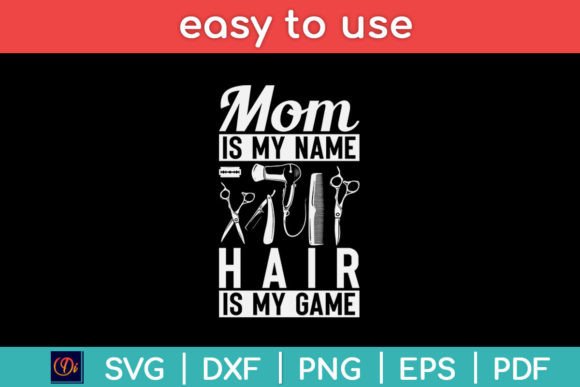
Mom is My Name, Hair is My Game Barber Design Review
As a designer who spends more time with embroidery machines than with coffee machines, I get a lot of files sent my way for review. Today, I’m looking at the Mom is My Name Hair is My Game Barber design with a practical eye—how does it actually perform when you’re thinking about stitching it onto a real product for a client, a gift, or your shop shelf?
The First Impression: Playful Confidence
Right off the bat, this design has a specific, cheerful personality. It’s not a generic floral motif; it’s a statement. The layout feels balanced, with the text taking center stage and a clear, thematic focus. The ‘barber’ element ties it back to a craft, which creates an immediate mood of playful confidence and skill. For an embroidery project, this means it’s destined for items where the message is the main feature—it’s a design that speaks before it decorates.
From a purely visual standpoint, the detail level appears suitable for machine embroidery. There’s enough boldness in the implied shapes to translate well into satin stitches and fill areas without getting lost. It naturally belongs on personalized gifts and custom apparel where you want to celebrate a specific identity or profession.
Where This Design Shines in Real Projects
Let’s talk application. I immediately pictured this on a sturdy cotton tote bag for a hairdressing mom—a practical, daily-use item that carries a personal badge of honor. The scale would work beautifully. Similarly, it’s a strong candidate for a sweatshirt or a durable apron, becoming a uniform of sorts.
For small business owners and Etsy sellers, this design has clear commercial appeal. It’s perfect for creating a line of niche products for stylists, barbers, or confident mothers in the trade. Think embroidered patches for work bags, custom pillow covers for a salon waiting area, or even well-stabilized tea towels as a fun salon gift. The theme is specific enough to attract a dedicated buyer looking for something that truly represents them.
In the realm of baby items or nursery decor, it could be a charming, personalized touch on a blanket for a new mom who runs her own salon, blending motherhood and profession. For holiday gifts or wedding gifts for a creative entrepreneur friend, an embroidered cap or a neat kitchen towel with this design feels thoughtful and uniquely tailored.
Careful Considerations for Stitching Success
No design is universally perfect, and practical judgment means spotting where a file might need extra attention. With Mom is My Name Hair is My Game Barber, the key consideration will be the text. Any tiny lettering or intricate corners in the typography could become challenging on textured fabrics or curved surfaces like caps.
I’d be cautious about using it on very thin or stretchy fabric without excellent stabilizer, as dense stitch areas could pull. On dark fabric, thread color contrast is paramount—you’d need a color palette that pops clearly. For small hoop sizes, you must check that the design’s scale can be reduced without losing the clarity of the message and details.
Products that require frequent washing, like apparel, need a stitch density that’s robust but not so heavy it stresses the base fabric. Always, always test on scrap fabric first. This isn’t just a step; it’s your insurance policy for a beautiful finished product.
How Embroidery Elevates the Design's Value
When this graphic transitions from a digital file to physical stitches, its value changes. On a handmade product, the texture of embroidery adds a layer of craftsmanship that a simple print cannot match. This builds customer trust and enhances the perceived value of your work.
For a craft business, using a design like this consistently across your merchandise—say, on tote bags, sweatshirts, and aprons—can create a cohesive brand line for your shop. Its giftability skyrockets because embroidery feels personal and permanent. The professionalism of your stitching execution directly affects buyer engagement; a clean, precise rendition of this confident message will make people stop and look.
Practical Notes From the Hoop
Before you load this embroidery file, here are my on-the-ground notes. Review the stitch density in your software preview. Does it look balanced? Inspect those small details in the design elements; zoom in and imagine them as threads.
Test the design in black and white mockups to judge its form independently of color. Compare how it might look on both light and dark fabric backgrounds—sometimes a design needs a border or a slight adjustment for contrast.
Use the proper stabilizer for your chosen fabric. This is non-negotiable for maintaining clarity. Crucially, check the provided licensing details. Confirm whether this is cleared for both personal projects and commercial use before you sell any finished items or incorporate it into your digital product previews. Your business reputation depends on this.
Finally, consider thread colors carefully. This design’s mood might lean toward bright, bold choices, but sometimes a classic black and white embroidery can make a powerful, clean statement on a garment.
The Final Stitch: A Design With Purpose
Mom is My Name Hair is My Game Barber isn’t a background pattern. It’s a front-and-center declaration. In the hands of an embroidery designer, it becomes a tool for creating products with a strong, specific voice. It’s for the maker who wants to celebrate a profession, for the small shop owner curating a niche collection, and for the gift-giver seeking something meaningfully personalized.
My judgment? It’s a worthwhile design asset for your embroidery project library if your audience aligns with its theme. With practical testing and thoughtful application on suitable products—like that sturdy tote or a premium sweatshirt—it will stitch out as a confident, engaging piece that resonates. Just remember the core rule: know your fabric, know your machine settings, and always stitch with intention.